From Haiku to Sonnet: Poetry Examples You Need to See
In the labyrinthine realms of literature, poetry stands as a delicate tapestry woven of emotion, rhythm, and imagery. From the succinct brilliance of a haiku to the grandiloquent structure of a sonnet, the spectrum of poetic forms enchants readers and writers alike. Each form beckons you to explore the depths of human experience in different and profound ways.
1. The Haiku: Brevity and Depth
Nestled within the simplicity of its form, the haiku captures fleeting moments in a mere seventeen syllables. This Japanese verse, characterized by its seasonal references and evocative imagery, allows the poet to convey profound truths gleaned from nature and the human condition.
Here is a haiku that encapsulates the essence of twilight:
The whispering dusk,
A crescent moon stains the sky,
Night’s velvet embrace.
As you tread upon the path of haiku, one must embrace the restraint of its structure. The essence lies not in expounding ideas but in distilling observations into mere fragments of existence. It challenges poets to evoke emotions without the luxury of extensive elaboration.
2. The Limerick: Whimsy and Wit
While haikus engage the heartstrings, limericks often tickle the funny bone. This five-line form, with its distinctive AABBA rhyme scheme, embodies joviality and playful mischief. The rhythm dances, propelling the reader through punchy lines filled with humor and clever twists.
Consider this whimsical example:
There once was a cat on a spree,
Who fancied himself quite the tree.
He climbed to the top,
With a triumphant hop,
And purred, “It’s just nature for me!”
In limericks, the cadence plays a pivotal role. The rhythm invites laughter, allowing the poet to convey a story or a sly observation in a tight-knit package. Such playful forms remind us that poetry can be both profound and delightfully absurd.
3. The Villanelle: A Dance of Repetition
As we delve deeper into the fabric of poetry, we encounter the villanelle—a form that revels in its cyclical nature. With nineteen lines arranged in five tercets followed by a quatrain, this structure is imbued with a lyrical quality that evokes an echo of emotion.
Here’s a glimpse into the soul of a villanelle:
Do not go gentle into that good night,
Old age should burn and rave at close of day;
Rage, rage against the dying of the light.Though wise men at their end know dark is right,
Because their words had forked no lightning they
Do not go gentle into that good night.Good men, the last wave by, crying how bright
Their frail deeds might have danced in a green bay,
Rage, rage against the dying of the light.Wild men who caught and sang the sun in flight,
And learn, too late, they grieved it on its way,
Do not go gentle into that good night.Grave men, near death, who see with blinding sight
Blind eyes could blaze like meteors and be gay,
Rage, rage against the dying of the light.And you, my father, there on the sad height,
Curse, bless, me now with your fierce tears, I pray.
Do not go gentle into that good night.
Rage, rage against the dying of the light.
The repetition in a villanelle reinforces the urgency of its themes, drawing readers into a meditative state. It compels them to reflect on existential questions while dancing along the rhythmic lines of despair and defiance.
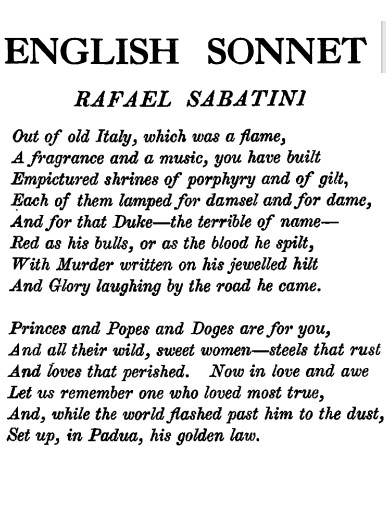
4. The Sonnet: An Eloquent Craft
Finally, we arrive at the sonnet—a pinnacle of poetic mastery. This fourteen-line form, with its rigid structure and poignant content, invites us to explore love, beauty, and the passage of time. Traditionally composed in iambic pentameter, its rhyme schemes can take many shapes, from the Shakespearean to the Petrarchan.
Here is an example of a sonnet, illustrating love’s ephemeral nature:
Shall I compare thee to a summer’s day?
Thou art more lovely and more temperate.
Rough winds do shake the darling buds of May,
And summer’s lease hath all too short a date;Sometime too hot the eye of heaven shines,
And often is his gold complexion dimmed;
And every fair from fair sometime declines,
By chance, or nature’s changing course, untrimmed;But thy eternal summer shall not fade
Nor lose possession of that fair thou owest;
Nor shall Death brag thou wanderest in his shade,
When in eternal lines to time thou growest:So long as men can breathe or eyes can see,
So long lives this, and this gives life to thee.
Each quatrain and the final couplet unfurl like petals, revealing layers of meaning and emotion. In a sonnet, every word is meticulously chosen; every line hinges upon the previous one, creating a rich interplay of ideas and sentiments.
5. The Journey of a Poet
The transition from haiku to sonnet mirrors the journey of a poet, navigating the delicate balance between simplicity and complexity. Each poetic form enriches your understanding, teaching you to wield language with precision and elegance. Set your pen to paper and embrace the vastness of poetic expression. From the ephemeral beauty of a haiku to the profound truths clasped within a sonnet, explore the written word and allow it to resonate within you, creating an indelible mark upon your soul.